

Industry Talk - POV
Research is Design
by Layal Merhi Architect, Researcher and Designer
May 22, 2026
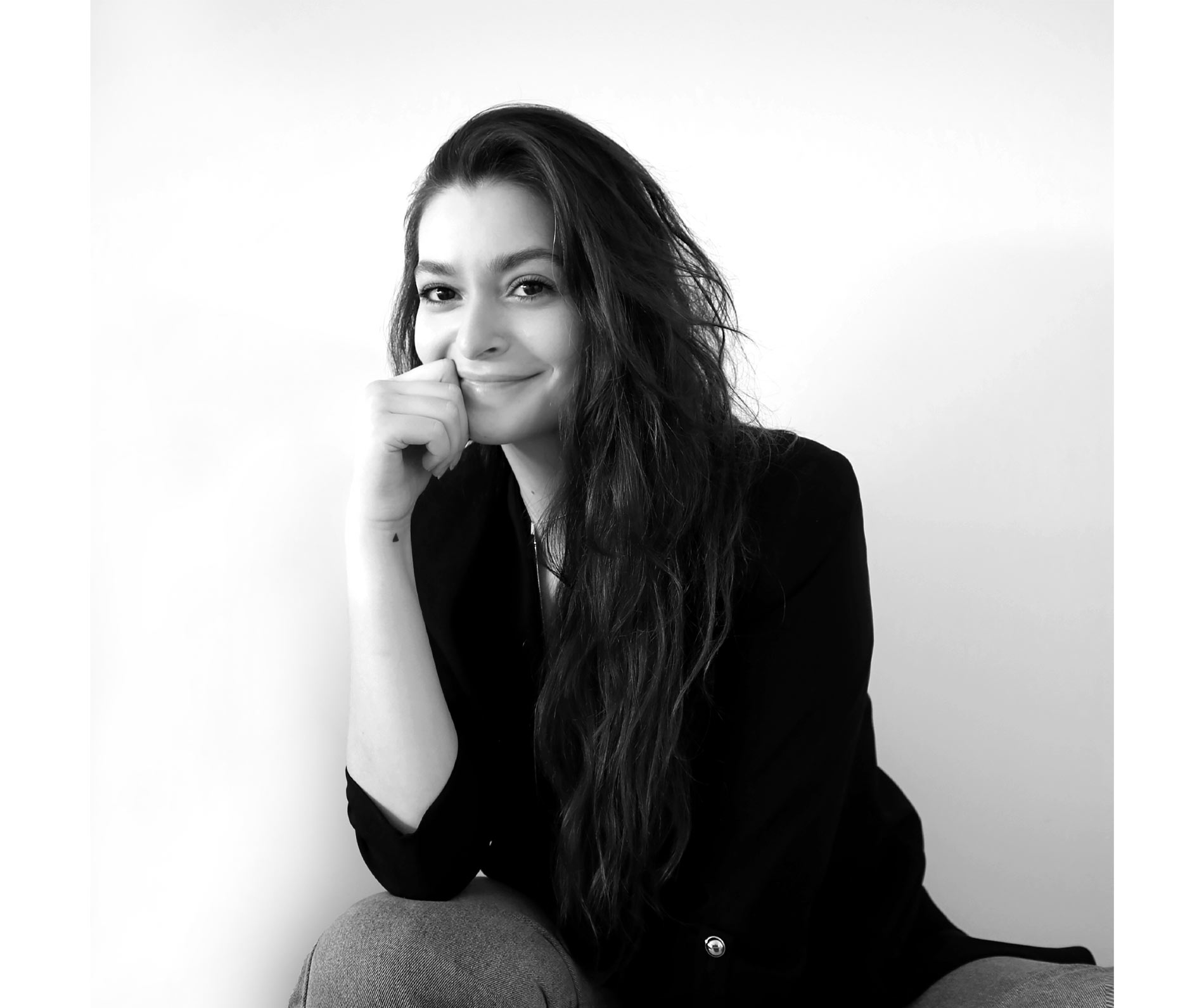


A lot of architectural work today happens long before construction begins, and often nowhere near a construction site at all. Layal Merhi, Architect, Researcher and Designer, explains why part of the confusion comes from the way architecture is still represented publicly.

'There’s still a tendency to treat research and design as separate practices. One produces knowledge, the other produces form. One is slow, analytical, often invisible; the other is expected to materialize into something immediate and legible.But the longer I work between academia, practice, and cities like Beirut, the less convincing that distinction feels. Some of the most urgent design work I’ve encountered hasn’t begun with a building at all. It began with observation. With tracing patterns of use, listening to how people adapt to space under pressure, paying attention to what systems fail to hold and what emerges in their place. Research, in that sense, is not preparation for design. It is design.
Part of the confusion comes from the way architecture is still represented publicly. The discipline continues to privilege the finished object: the completed building, the clean photograph, the rendering before occupation begins to complicate it. Research, meanwhile, is often framed as background work. Necessary, perhaps, but secondary. Something that supports design rather than constituting it. But cities do not operate through isolated objects. They operate through relationships, systems, negotiations, and accumulations that are often difficult to represent cleanly. Especially in places shaped by instability.
Growing up in Beirut made that impossible to ignore. It’s a city where infrastructure is constantly visible because it is constantly failing. Water, electricity, transportation, telecommunications; these are not hidden systems operating seamlessly in the background. They shape daily life directly, forcing people into continuous acts of adaptation. You begin to notice how space is negotiated under pressure. How buildings absorb functions they were never intended to hold. How entire neighborhoods operate through unofficial systems running parallel to official ones. Eventually, you realize that if design only engages with the formal image of the city, then it misses the city almost entirely.
Some of the projects that have stayed with me most were never about producing singular architectural objects. They were about reading conditions carefully enough to reveal something that was already there. During my graduate research and my time in the US, I found myself increasingly drawn toward the spaces where memory, infrastructure, and ecology begin to overlap. Not memory as nostalgia, but memory as an active spatial condition. Something embedded in material, circulation, residue, occupation. Beirut, for example, carries memory in a very physical way. It settles into buildings, into abandoned structures, into routes people continue taking long after the political logic that produced them has shifted.
At a certain point, I became less interested in asking “what should be built?” and more interested in asking “what is already happening here that we’ve stopped fully seeing?”. That shift changed the way I understood practice altogether.
Research stopped feeling like a preliminary phase before the “real work” began. It became a way of engaging spatial realities that traditional architectural tools often struggle to capture.
Sometimes the work involved mapping; other times, writing. Sometimes collecting fragments, images, testimonies, material traces. Sometimes it meant sitting with contradictions without immediately trying to resolve them into a proposal. There’s a tendency within design culture to treat ambiguity as failure, when in reality ambiguity is often the condition itself.
Teaching reinforced this for me even further. One of the things I’ve become increasingly aware of while working with students is how much architectural education still centers certainty. We teach students how to present resolved ideas, how to defend positions, how to produce coherent narratives around projects. But the environments many young designers are entering are anything but stable. Climate instability, displacement, economic collapse, political fragmentation, rapidly shifting technologies; these conditions demand forms of practice that are observational, adaptive, and capable of working across disciplines.
I often find that the most interesting moments in studio happen before students begin designing anything formally. It happens when they start paying attention differently. When they begin noticing patterns of occupation, informal behaviors, hidden systems of maintenance, tensions between public and private life, or the social realities embedded within ordinary spatial decisions. The project becomes stronger not because the form becomes more complex, but because the reading becomes more precise.
And yet, within the broader industry, research-driven practices are still often treated as peripheral. There remains an assumption that rigorous investigation somehow exists in opposition to creativity, as though analytical work limits imagination rather than expanding it. But observation has always been deeply tied to design. The ability to notice relationships, to identify emerging conditions, to read what is changing socially and spatially before it becomes obvious; these are design skills.
Increasingly, some of the most important design work today is happening outside conventional disciplinary boundaries altogether. It’s happening through spatial journalism, archival practices, ecological investigations, community-led mapping, speculative narratives, digital documentation, and forms of public engagement that don’t always result in buildings. That does not make the work less architectural. If anything, it expands architecture’s capacity to engage with the realities shaping contemporary life.
This expansion is necessary. Not because buildings no longer matter, but because the conditions surrounding them have become too complex to approach narrowly.
The role of the designer can no longer be limited to producing form in isolation from the political, ecological, and social systems that form emerges within. Research allows us to remain attentive to those entanglements. It slows down the impulse to immediately solve, package, or aestheticize conditions before understanding them properly.
In many ways, the projects that have influenced me most are the ones that resisted easy resolution. The ones that stayed close to observation. The ones that understood design not only as production, but as a way of paying attention. Maybe that is what research ultimately offers architecture: not distance from practice, but a deeper proximity to reality.'