


News - Advertising
The man behind Epica and Pikasso d'Or: Andrew Rawlins dies
by Ghada Azzi
July 30, 2026
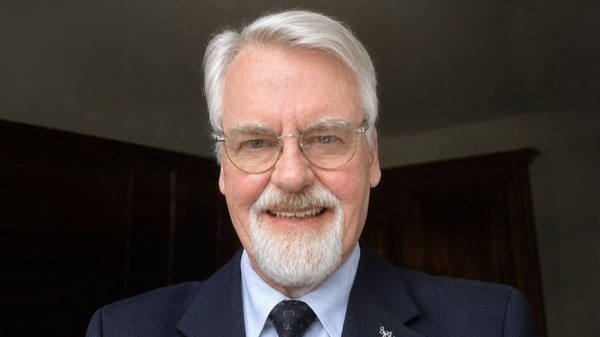
Andrew Rawlins, the founder of the Epica Awards and a longstanding figure in the international advertising awards community, has died. Tributes have poured in from across the global creative and Out-of-Home (OOH) industry, where he was widely respected as both an awards architect and an authority on advertising history.

Rawlins launched the Epica Awards in 1987 while serving as President of DMB&B France. At a time when creative recognition was largely divided between national competitions and a handful of international festivals, Epica introduced a different model: campaigns would be judged exclusively by journalists covering advertising and communications, rather than by industry peers. Nearly four decades on, that editorial jury remains the awards' defining characteristic and ArabAd has been part of the jury for about 20 years now.
Originally from the UK, Rawlins began his career in London before moving to Paris, where he spent much of his professional life. Alongside his agency leadership roles, he earned a reputation as one of advertising's foremost historians, known for an exceptional knowledge of campaigns, agencies and creative culture spanning several decades.
His contribution to the industry extended beyond Epica. Working alongside French advertising veteran Alain Weil, Rawlins helped establish a number of international initiatives, including the Cresta Awards and the Chaumont Festival. In the Middle East, he played a central role in shaping the Pikasso d'Or, first serving as Secretary General before succeeding Weil as Jury President. He remained in that role until 2025, when he handed the presidency to Dino Burbidge.
During his tenure, the Pikasso d'Or grew into one of the region's leading Out-of-Home creative competitions, bringing international judging standards to Middle Eastern work while helping raise the profile of regional OOH creativity.
Announcing his passing, Pikasso described Rawlins as one of the guiding figures behind the awards, crediting his integrity, expertise and deep understanding of global Out-of-Home creativity with helping establish the programme's credibility.
Antonio Vincenti, Chairman and CEO of Pikasso, said: "Andrew Rawlins has been a cornerstone of the Pikasso D'Or since its inception, before passing the baton to Dino Burbidge in 2025. He had a rare combination of qualities that made him truly exceptional. Through his work with the Epica Awards, he became the living memory of tens of thousands of outdoor advertising campaigns. At the same time, he remained remarkably humble, fair-minded in jury deliberations, and always eager to build new friendships with creatives from all countries. His friendship, unwavering support, and constant enthusiastic availability will never be forgotten. We will deeply miss him."
Honorary Pikasso d'Or President Alain Weil reflected on a partnership that lasted more than 30 years. He recalled inviting Rawlins to help launch the Epica Awards in the mid-1980s before the pair went on to create the Chaumont Festival, the Cresta Awards in New York and later the Pikasso d'Or.
Weil described Rawlins as the meticulous organiser behind the scenes, overseeing presentations, jury records and deliberations, while he himself took on a more public-facing role.
Current Pikasso d'Or Jury President Dino Burbidge also paid tribute to his predecessor. "Taking over the Presidency of the Pikasso D'Or could have been a daunting experience, but Andrew was there. Watching him generously share decades of wisdom as he effortlessly navigated multiple regions, languages and categories, balancing a room full of passionate and deeply experienced OOH judges, was a real honour... Andrew was our giant. His spirit will live on in every future Pikasso D'Or, and for that we will always be grateful."
Beyon the awards he founded and helped shape, Rawlins was remembered for his quiet leadership, fairness and generosity. His influence can still be seen in the way creative work is evaluated today, particularly through the independent editorial judging model that has remained at the heart of the Epica Awards for nearly 40 years.
Topics
Recommended
Macron addresses Cannes Lions as France receives 2026 Creative Country honour

A new force enters MENA communications: RAIYN launches in Dubai

Cairo Ad School Secures Global Recognition

Most Read

By Reviving the Voice of a Jordanian Legend, Umniah by Beyon's Darb El Asateer Became the Soundtrack of a Nation Overnight

AI won't replace Marketers. It will destroy the ones who can't think in Systems
Antonio Vincenti Honored with Lifetime Achievement Award