

News - Media
The State of Print Media in Lebanon: Between Survival and Revival
by Christina Fakhry
July 24, 2026


Following the
2019 financial collapse, Lebanon’s print media industry suffered a historic blow,
with over 20 newspapers and magazines forced to suspend publication or shut
down entirely.
Six years later, only a handful of print publications remain in the arena. Prevailing survivors continue to reinvent what print journalism entails today, navigating an increasingly tough landscape tainted with economic instability, shrinking ad revenue and shifting media consumption habits.
Is there still hope for a print media revival in Lebanon? ArabAd* probes the pulse of print through the eyes of seasoned advertising and publishing professionals, brushing upon industry trends like niche positioning, hybrid print-digital models and renewed trust in quality journalism.
A Model at the End of its Rope
When asked to describe the current state of print media in Lebanon in as few words as possible, veteran publisher and founder of prominent market research firm InfoPro Ramzi El Hafez asserted, “The current model is at the end of its rope. Digital is for the masses, print for the elite.”
With his company’s landmark titles Lebanon Opportunities and Gallery Magazine among the very few magazines still published on a regular basis in Lebanon today, he sees no chance of reverting back to the traditional model. “Publications need to serve a need that is not available online, be it in terms of content, audience or positioning,” he told ArabAd.
This seismic shift goes far beyond the local context. “Print media around the world has gone through extremely difficult times since the rise of digital and social media. Many publications have shut down their print editions to focus entirely on digital platforms,” PressMedia COO Naji Irani said.
Part of Choueiri Group, the company has long been the exclusive media representative of the county’s best-known publications An-Nahar and L'Orient le Jour, as well as formerly the since-folded As-Safir, Noun and Le Commerce du Levant.
“In Lebanon, the decline in advertising investment started to become noticeable around 2017–2018. The economic crisis further amplified the phenomenon, leading a large number of publications to close down,” Irani added. “Only a few daily newspapers and magazines managed to survive and continue printing, while shifting their main focus toward digital platforms.”
The Digital-Print Formula Shift
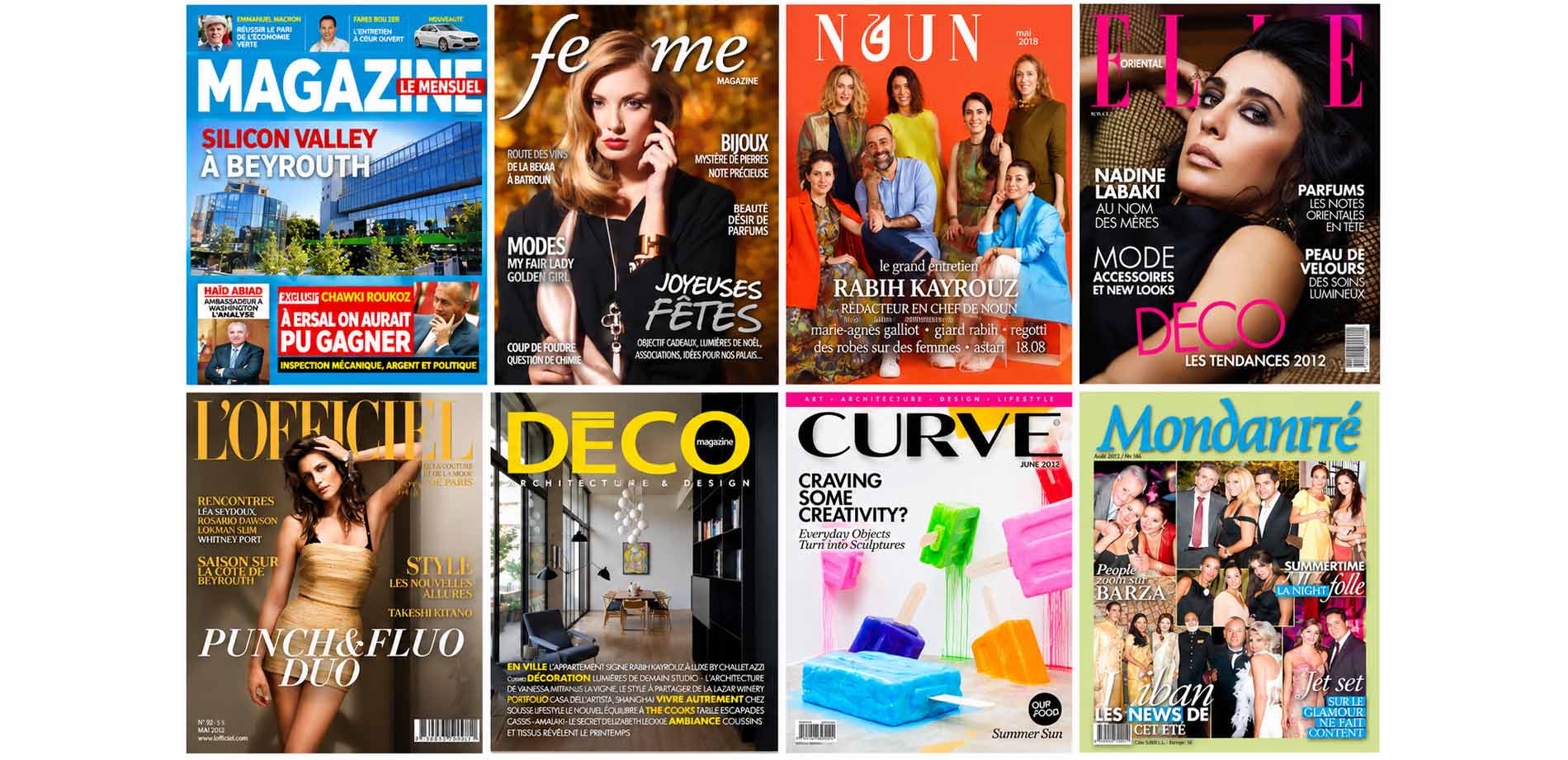
Aside from cult titles that ceased publishing long before the collapse like Teen World and Ragmag and outlets that migrated operations to the gulf, other now-defunct print publications include newspapers As-Safir, Al-Balad, Al-Anwar and Al-Mustaqbal among others, prominent English news outlet The Daily Star, and lifestyle magazines such as Noun, Elle Oriental, L'Officiel, Snob, Al-Shabaka, Fairuz and Prestige Magazine.
But in spite of Lebanon’s ongoing crises, established media brands such as leading Arabic-language newspaper Annahar and premier French-language publication L’Orient-Le Jour alongside its more recent English-speaking news platform L’Orient Today, are performing strongly through their digital applications and online platforms.
“Both media outlets have diversified their offerings by introducing new services such as podcasts, video content and multimedia storytelling,” Irani noted. “This evolution is attracting new audiences, especially younger generations, and consequently advertisers looking for more dynamic and engaging platforms.”
The survival of the few homegrown titles that remain in print today hinged on evolving business and advertising models. El Hafez cities his long-term vision as a publisher including “a fair degree of craziness” among the converging factors that have kept his landmark magazines alive.
“While there is currently no winning business model, one will emerge once the market recognizes that digital advertising and promotion does not cover all bases,” he observed. “Our strong media brands will be monetized beyond the actual publications, but the financial crisis and the multiple wars have delayed this from occurring.”
Reading into The Future of Print
As savvy audiences crave quality journalism amid a sea of fake news stirred by waves of disinformation, print remains an anchor of credibility and in-depth analysis in today’s media landscape. “The future belongs to media organizations that are able to combine credibility, strong journalism and innovative digital experiences,” Irani affirmed.
“There is still hope for print and traditional media brands, provided they continue to innovate, adapt to new consumption habits, follow emerging trends and invest in quality content and digital transformation,” he continued. El Hafez echoed a similar outlook at the local scale, “Print media in Lebanon will not disappear entirely if it succeeds in changing its role fundamentally.”
The seasoned publisher emphasized how the era of large-circulation newspapers primarily supported by advertising revenues is fading away as audiences increasingly consume news online and advertisers follow suit. “However, there is still space for well-positioned print publications that offer credibility, depth, analysis and strong editorial identity, particularly in business, culture, art and specialized sectors,” he noted.
He also cited diversifying revenues “through subscriptions, partnerships, branded content, tie-ins with events, specialized exclusive information services and customized promotional services” as a non-negotiable. “Above all, publications that maintain flawless professional standards, trusted journalism, and distinctive content will continue to have relevance in a crowded and often unreliable information environment,” he assured.
“To survive and evolve, publications need to become more selective and premium in their approach,” El Hafez concluded. “They must integrate with other media or non-media platforms which are the center of their strategy while treating print as a high-value product rather than a mass medium.”
* Published in ArabAd Lebanon special issue – June 2026