

News - Media
The MENA region remains fundamentally growth-oriented
by ArabAd's staff
July 21, 2026
As media investment across the MENA region undergoes a profound
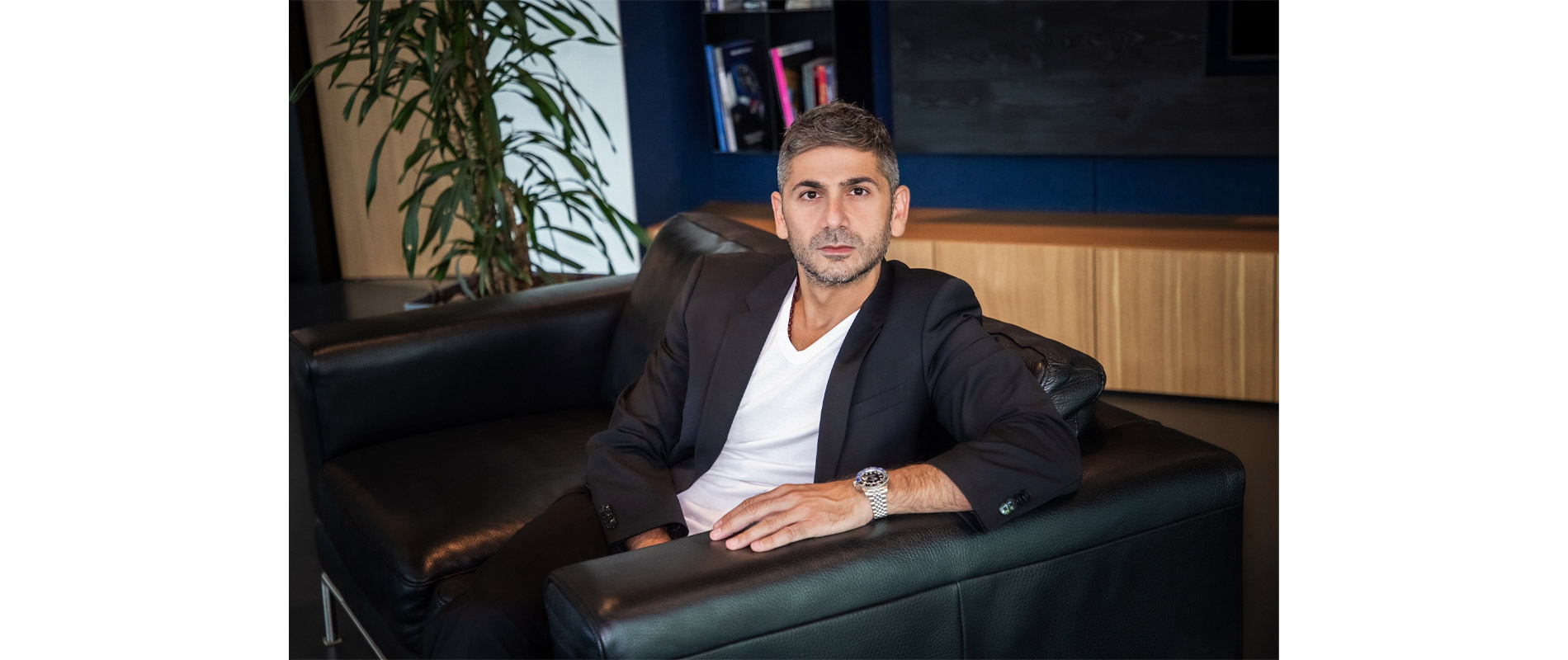
transformation, few executives have had a closer view of this evolution than Elie Bechaalany, Chief Investment Officer at Omnicom
Media MENA. From navigating the operational turbulence caused by regional conflict
to redefining media investment as a business growth engine rather than a cost
center, Bechaalany offers a sharp perspective on the forces reshaping the
industry. In this interview with ArabAd, he discusses the impact of
geopolitical instability on media spending, the accelerating shift toward
measurable and integrated ecosystems, and the key trends that will define media
investment across MENA in the years ahead.
The recent Gulf war has disrupted multiple sectors across the region. From a media investment standpoint, how did your teams and clients cope operationally during the peak of the crisis?
The first priority during the peak of the crisis was agility. As someone overseeing media investment across markets at Omnicom Media MENA, I saw firsthand how quickly planning models had to adapt. In moments of regional instability, media investment takes on the critical role of reflecting changes in plans and making real-time adjustments to protect clients' changing business demands, while also manage the supply side and help our media partners adjust to these changes.
Operationally, we shifted into daily scenario planning across markets, categories, and media channels. Clients needed immediate visibility on inventory availability, audience behaviour shifts, pricing fluctuations, and consumer sentiment. The role of investment teams evolved from negotiators into strategic risk managers.
What became very clear is that consumer behaviour changes faster than corporate structures during periods of uncertainty. Audiences moved heavily toward live news consumption, social platforms, streaming environments, and mobile-first engagement. This forced brands to rethink not just where they spent, but how they communicated.
“Consumer behavior changes faster than corporate structures during periods of uncertainty
The companies that navigated the period best were the ones that stayed flexible. Instead of pausing entirely, they reallocated budgets dynamically toward measurable channels, contextual messaging, and platforms with stronger accountability.
At the same time, partnerships became critical. During volatile periods, relationships with media owners and platforms matter more than ever. Collaboration, flexibility, and commercial transparency became essential across the ecosystem.
Can you share the immediate impact on media spend? Were there significant budget cuts, freezes, or reallocations? In which markets or sectors was this most visible?
The immediate reaction was caution rather than complete withdrawal.
We saw three distinct behaviours from advertisers:
First, temporary freezes from sectors directly exposed to consumer confidence and regional movement such as travel, tourism, aviation, luxury retail, and parts of real estate.
Second, budget reallocations rather than cuts. Many advertisers shifted investments toward channels that offered flexibility, measurable outcomes, and shorter optimisation cycles. Search, social, retail media and performance-led digital channels often became natural pressure valves because they allowed brands to adjust spending in real time.
Third, some sectors accelerated spending. FMCG, telecom, and certain e-commerce players increased communication efforts to protect market share and maintain consumer relevance during uncertainty.
Geographically, the impact was different from one market to another. Economies more reliant on tourism or investor confidence were naturally more cautious with spending. On the other hand, some of MENA’s stronger economies continued investing, but with a sharper focus on efficiency, performance, and measurable returns.
What changed most was not necessarily the amount being spent initially, but the speed at which investment decisions had to be made.
To what extent did the conflict translate into measurable losses for agencies and advertisers, whether in terms of revenue, campaign cancellations, or delayed investments?
There was short-term disruption across the industry, particularly around campaign delays, postponed launches, and slower commitment cycles.
However, the impact was not linear across all sectors or media channels.
Historically, periods of regional instability tend to compress decision-making windows rather than eliminate advertising altogether. Brands still need growth, visibility, and consumer engagement. The difference is that they demand more accountability from every dollar invested.
For agencies, the pressure intensified around two areas:
- Forecast accuracy
- Operational agility
The biggest challenge was managing volatility while maintaining long-term strategic partnerships.
At the same time, the disruption accelerated structural shifts that were already happening:
- Faster migration toward measurable media
- Increased demand for commerce-driven ecosystems
- Greater emphasis on first-party data and outcomes
- Stronger scrutiny on traditional reach-based planning models
In many ways, the period accelerated the modernisation of media investment practices across the region.
Looking at 2026, how do you expect the aftermath of the war to impact overall media investment across MENA? Are we looking at a slowdown, cautious recovery, or a rebound?
I believe we are entering a phase of selective acceleration rather than a uniform rebound.
The MENA region remains fundamentally growth-oriented, especially in markets where governments continue investing heavily in diversification, tourism, infrastructure, entertainment, and digital transformation.
However, advertisers will remain more disciplined, with every investment needing to justify its role in delivering tangible outcomes.
What we are likely to see in 2026 is:
• Stronger investment into measurable ecosystems
• Faster growth in commerce media and retail media
• Continued acceleration of connected TV and streaming
• Expansion of digital out-of-home infrastructure
• Greater consolidation around fewer, more strategic media partners
At the same time, brands will prioritise flexibility. Long-term commitments will continue, but with built-in adaptability to respond to macroeconomic or geopolitical volatility.
The market is not slowing structurally. It is maturing operationally.
“We are entering a phase of selective acceleration rather than a uniform rebound”
How are you redefining the role of media investment within the broader business and marketing strategy of your clients?
The role of media investment today goes far beyond buying media space. We are increasingly acting as strategic guides to our clients, helping them invest budgets where real business outcomes and growth opportunities exist.
Today, investment teams are involved much earlier in the decision-making process, from understanding consumer behaviour and market trends to helping shape commercial and growth strategies.
The reason is simple: consumer behaviour has changed dramatically. People move seamlessly between content, commerce, entertainment, social platforms, and retail environments. Because of that, media investments can no longer be planned in silos.
Our role today is to help clients build connected ecosystems across brand, performance, commerce, data, and technology, while ensuring every investment is aligned to measurable business impact.
The modern investment function is no longer only about negotiating rates. It is about creating value and helping brands grow smarter, faster, and more efficiently.
We’re seeing a shift from fragmented media buying to more integrated ecosystems. What does this look like in practice across MENA markets?
This is true. The fragmented media buying model created a lot of inefficiencies, with brands managing disconnected channels, separate KPIs, and isolated strategies.
Today, the industry is moving toward more integrated ecosystems where planning, data, commerce, and media work together instead of separately. Technology and automation is facilitating that.
In an era of performance-driven marketing, how do you balance short-term ROI with long-term brand building?
Sustainable growth requires both. Performance marketing captures demand. Brand building creates future demand.
Over-optimisation for short-term efficiency can eventually weaken brand equity and pricing power.
The balance comes from designing media architectures where:
Brand investment builds mental availability
Performance investment captures active intent
Measurement frameworks evaluate both immediate and future business impact
The brands winning in MENA today are the ones combining cultural relevance with commercial accountability.
What are the key metrics or KPIs that truly matter today when evaluating media effectiveness?
The industry today is moving beyond traditional vanity metrics. While reach and impressions still play an important role, they are no longer enough on their own. The focus has shifted toward metrics that are directly tied to business outcomes such as sales growth, customer acquisition, market share, brand consideration, retail conversion, and overall return on investment.
At the same time, speed and agility have become critical. In today’s media environment, the ability to optimise and react quickly to consumer behaviour can be a competitive advantage.
The cheapest media is rarely the most effective. The real KPI is commercial impact.
What should CMOs in MENA urgently rethink if they want to unlock more value from their media spend?
CMOs need to stop thinking in channels and start thinking in consumer systems.
Consumers no longer engage with brands in linear ways.
The second rethink is around measurement maturity. Many organisations still optimise toward outdated metrics that do not reflect actual business growth.
Finally, CMOs should rethink partnerships. The future will favour fewer, deeper, more strategic relationships built around data, technology, commerce, and long-term value creation.
To what extent can technology replace human judgment in media strategy, and where does it fall short?
Technology will automate execution increasingly well. It will not replace strategic judgement.
AI and automation are transforming optimisation, forecasting, bidding, targeting, and operational efficiency. They are making media systems faster and smarter.
But strategy is ultimately about understanding people, culture, psychology, and business context.
Technology can identify patterns. Humans interpret meaning.
Algorithms optimise based on available signals, but they cannot fully understand emotional resonance, cultural nuance, geopolitical sensitivity, or long-term brand positioning.
What key trends will define media investment in MENA over the next 2–3 years?
Several structural shifts will define the next phase of media investment growth across MENA.
Retail media and commerce ecosystems will continue accelerating as brands increasingly look for investments tied directly to transaction environments and measurable business outcomes.
Connected TV and streaming will also continue growing rapidly as audiences move further toward digital video consumption.
At the same time, programmatic digital out-of-home will scale rapidly, particularly in markets like the UAE and Saudi where smart city investments, retail expansion and infrastructure development are creating entirely new media environments and experiences.
AI-powered planning and optimisation will become standard across the industry, not as a replacement for strategic thinking, but as a tool that improves efficiency, speed, and decision making.
Another major shift will be around first party data and measurement frameworks, especially as privacy regulations evolve and brands seek greater ownership of consumer insights.
From an investment strategy perspective, the industry will move even further toward consumer led planning models. Strategies will increasingly be built around how audiences consume content, shop, engage, and move across platforms in real time. Technologies, platforms, and media models that are not aligned with evolving consumer behaviour may struggle to remain relevant over the long term.
We will also see advertisers becoming more selective with partnerships, prioritising ecosystems that offer transparency, accountability, flexibility, and integrated capabilities across media, commerce, data, and technology.
Ultimately, the next chapter of media investment in MENA will be defined by intelligence, integration, adaptability, and a much stronger connection between media investments and real commercial impact.