


News
Thirty-two years after Imola. He Drove at 300 km/h. He Still Hasn't Stopped.
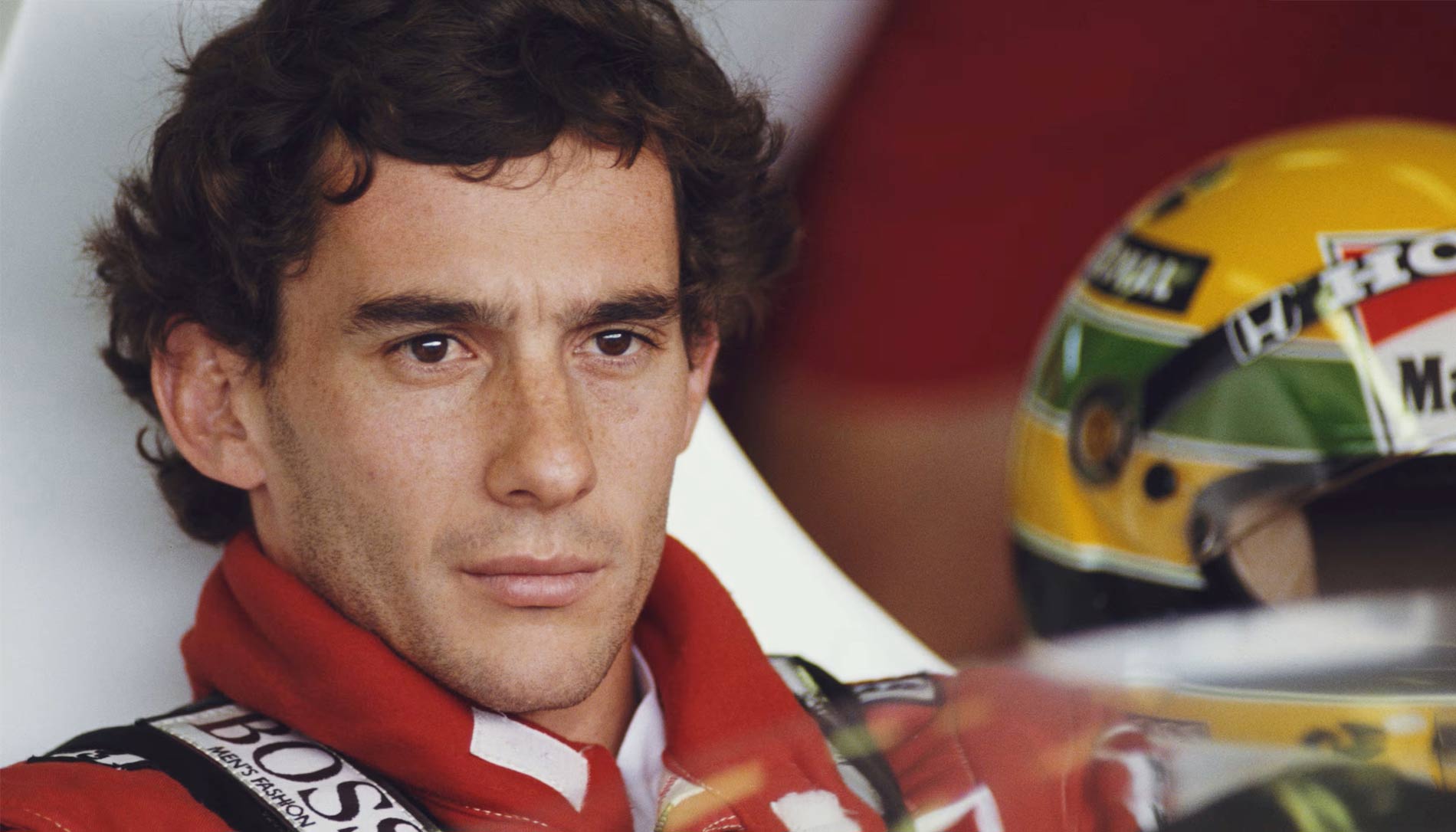
May 1st arrives quietly
every year. And every year, for millions of people across the world, it carries
a weight that never quite lifts. Thirty-two years ago today, at 2:17 in the
afternoon, at the Tamburello corner of the Imola circuit, the Williams of Ayrton
Senna da Silva struck a concrete wall at more than 300 kilometres per hour.

The telemetry showed something extraordinary. Even in those final, impossible split-seconds - realising the inevitable - he had managed to scrub speed from 300 to 200 km/h. Even then. Even then. He was still trying to solve the problem.
He was 34 years old. He was leading the race.
That last fact tells you everything you need to know about Ayrton Senna. And everything you need to know about what kind of leader he was. Three World Championships. 41 Grand Prix victories. 65 pole positions; a record that stood for 16 years. A supernatural ability to find grip where physics said there was none. And yet the numbers are not why billions of people still weep when his name is spoken.
They weep because Senna was not just a racing driver. He was a philosophy with a heartbeat. A force of conviction, humility, spirituality, ferocity, and love pressed into human form. For those of us who lead people, build brands, craft communication, and navigate volatile markets; there is no more relevant figure. Not in sport. Perhaps not anywhere.
This is not nostalgia. This is a masterclass.
I. The No-Middle-Ground Principle
"With regard to performance, commitment, effort, dedication; there is no middle ground. Either you do something very well, or not at all."
Senna's absolute refusal to operate in the space between excellence and failure was not ego. It was philosophy. He understood, at a visceral level, something that behavioural economists Daniel Kahneman and Amos Tversky would later codify in Prospect Theory: humans are wired to feel losses more acutely than equivalent gains. We are, by nature, loss-averse. We protect what we have. We hedge. We aim not to fail, rather than aiming to win.
Senna inverted this entirely. He made the absence of full commitment the loss. The risk was not in going all in; the risk was in holding back. Every half-measure, every hedged brief, every campaign that went to market "good enough" was, to him, the real crash.
In advertising and communication, loss aversion is everywhere. Brands approve safe work because edgy work might not land. Agencies present three options instead of one because presenting one might be wrong. Committees dilute ideas because any single voice might be challenged. The result? A marketplace littered with forgettable, perfectly-safe, commercially-irrelevant noise.
Senna's answer to loss aversion was identity: I am not designed to come third. I am designed to win. When you root your operating standard in who you are rather than what you fear, the calculus changes. You stop protecting. You start creating.
The question for every leader today: is your organisation's culture built around not losing; or around winning? The answer lives in how you brief, how you approve, and what you celebrate.
II. Going for the Gap
"If you no longer go for a gap that exists, you are no longer a racing driver."
This is arguably the most misquoted line in business. People hear it as a call to recklessness. It is the opposite.
When Senna went for a gap, he had already processed an enormous volume of information - the speed differential, the surface condition, the rival's line, the car's current capability - and made a committed, high-speed decision. Not reckless. Razor-precise. The gap existed. He saw it. He went.
Behavioural economics gives us the concept of Action Bias: under pressure, humans tend to act even when inaction is optimal, creating the illusion of control. But Senna's genius addressed the opposite problem; inaction bias: the tendency of capable leaders to freeze at the moment of maximum opportunity because the downside feels more real than the upside.
Think of the campaigns that were never made. The brand positions that were never taken. The market categories no one dared to own. Not because the gap didn't exist; because no one with the authority to act trusted themselves enough to accelerate.
At Donington in 1993, on a wet opening lap, Senna overtook four cars in the first three corners. He wasn't consciously thinking. He was executing accumulated mastery at speed. Your intuition is not irrational. It is compressed experience. Do the work - the laps, the briefings, the deep consumer understanding - until your instinct can be trusted. And then, when the gap opens, go.
Don't confuse hesitation with wisdom. In fast-moving markets, the gap closes in seconds.
III. Mastery in the Rain
"You cannot overtake 15 cars in sunny weather... but you can when it's raining."
Senna was not born with his legendary wet-weather skill. After a humiliating defeat in a rain-soaked kart race as a child, he went out alone in every downpour he could find - practising, failing, adjusting - until the conditions that terrified his rivals became his personal arena of supremacy. He didn't merely tolerate chaos. He trained for it, specifically.
We are, right now, in a permanent downpour. AI disruption. Fragmenting media. Post-trust consumer environments. Economic volatility. Political polarisation bleeding into brand communication. The algorithmic collapse of organic reach. The explosion of content, the implosion of attention.
Most organisations are doing what Senna's rivals did in the wet: slowing down, tightening the wheel, waiting for dry conditions that will never come. Status quo bias - the deeply human tendency to prefer the current state even when change would be beneficial - is lethal in volatile markets. Combined with ambiguity aversion, it creates organisations structurally incapable of moving when movement is most necessary.
Senna's answer is not a motivational poster. It is a training programme. The organisations that will dominate the next decade are those building explicit capability for uncertainty: scenario planning under pressure, creative processes designed for speed, leadership cultures that reward bold decisions taken in fog rather than punishing them retroactively.
In advertising and communication, the rain is the brief that arrives on Thursday for Monday delivery. It is the platform that didn't exist six months ago. It is the cultural moment that opens for 48 hours. The teams that have trained for this will pull away from those waiting for a cleaner brief.
The wet track is not temporary. Build for it.
IV. The Monaco Trance; Flow, Intuition, and the Limits of Reason
"And suddenly I realised that I was no longer driving the car consciously. I was driving it by a kind of instinct, only I was in a different dimension."
This is Senna describing his 1988 Monaco qualifying lap; during which he was lapping nearly 2.5 seconds faster than anyone else, including his world-class McLaren teammate Alain Prost in an identical car. He was so disturbed by the experience that he pitted voluntarily. It frightened him.
What Senna was describing is what psychologist Mihaly Csikszentmihalyi called Flow; the state in which conscious effort dissolves and performance operates through a different cognitive channel entirely. In flow, the prefrontal cortex - the seat of self-monitoring, doubt, and deliberate reasoning - quiets. The brain's pattern-recognition networks take over. You stop thinking about doing. You do.
This state is not mystical. It is the product of extreme preparation meeting extreme challenge. And it is directly applicable to creative leadership.
In advertising and communication, we build processes that systematically prevent flow. Lengthy approval chains. Presentation decks that substitute for genuine thinking. Research used to justify decisions already made. We optimise for the appearance of rigour while eliminating the conditions under which the best work actually emerges.
Senna was not ignoring data. He had metabolised more data than his competitors through thousands of laps, setups, adjustments, and conversations with engineers late into the night. His intuition was data, refined into something faster and more holistic than any conscious process could replicate. The task for leaders in creative businesses is not to choose between rigour and instinct; but to build the depth of expertise that makes instinct trustworthy, and then have the courage to trust it.
V. Authenticity as Architecture
"The main thing is to be yourself and not allow people to disturb you to be different, because they want you to be different."
Senna operated under relentless pressure to moderate himself. His rivalry with Alain Prost was political, public, and vicious. The FIA was frequently hostile. Teams had commercial interests. Sponsors needed management. And yet Senna remained - through three different teams, through championships won and lost, through controversy and adoration - completely, stubbornly, irreducibly himself. Spiritual. Fierce. Contradictory. Passionate. Uncompromising. Recognisable.
Behavioural economics offers a fascinating lens here through the Endowment Effect; the proven tendency to value things more highly once we own them, simply because they are ours. Senna had fully endowed his identity. He wasn't performing a brand; he was the brand. And because of that, every expression of it - his driving style, his words, his charity, his rivalries - reinforced a single, coherent signal that audiences could trust and hold onto.
For brand builders: consistency is not repetition. It is identity made visible over time. The brands that endure are not necessarily the most creatively diverse; they are the ones whose core character is so deeply owned that every execution, every touchpoint, every campaign feels like the same person speaking in a different room.
When Senna walked into a room, it fell silent. When he spoke, you listened. Not because of his titles. Because of his presence. Presence is the product of being genuinely, unalterably yourself; and of having paid the price, publicly, for not being anyone else.
Your brand's authentic voice is not a vulnerability in a fragmented world. It is your most defensible competitive asset.
VI. The Pit Crew Truth; Collective Intelligence
"There is no merit from a person, but from a team; mechanics, designers, sponsors. It's a set of people."
Here is the paradox of Senna: he was the most individually brilliant driver of his era, and he was the most insistent on the primacy of the team. He would stay at the circuit until 9 or 10pm before race days; sitting with engineers and mechanics, giving feedback, asking questions, contributing to a collective understanding of the car that no individual mind could hold alone.
Behavioural economics gives us Collective Intelligence Theory: groups consistently outperform individuals on complex tasks, but only when psychological safety exists; when members trust that contributing, dissenting, or admitting uncertainty won't be penalised. Harvard researcher Amy Edmondson has shown that high-performing teams are not composed of people who never fail. They are composed of people safe enough to talk about failing.
In advertising and communication agencies, the tension between individual creative ego and collective process is existential. The work that defines categories comes from somewhere at the intersection of the visionary and the team; the single idea stress-tested, sharpened, and believed in by a group of people with different skills and the same standard.
Senna gives permission to hold both truths simultaneously: be the best version of yourself, and recognise that the machine around you is what gets you to the finish line. Build teams where the standard is non-negotiable and the trust is absolute. That is where the great work lives.
VII. The Fragility Paradox; Staying Hungry at the Top
"The same moment that you are seen as the best - the fastest, someone that cannot be touched - you are enormously fragile."
This may be Senna's most important statement for any leader at the top of their game.
The Dunning-Kruger effect describes the well-documented tendency of low-competence individuals to overestimate their ability. But its inversion - less often discussed - is equally real: the highest-competence individuals often underestimate themselves, precisely because they know how much they do not know. They are aware of the gap between where they are and where they could be.
Senna lived this. Three World Championships in, and he was still at the circuit at 10pm. Still asking questions. Still feeling incomplete. He said openly: "There is a great desire in me to keep improving. Every time I feel that I'm slowing down my learning curve; it doesn't make me very happy." This is not insecurity. This is epistemic humility; the quality that separates genuinely great leaders from those who confuse current success with permanent advantage.
In the business of communication, the graveyard of agencies and brands is full of organisations that believed their reputation was a moat. It is not. Reputation is a lagging indicator. What protects you is the relentless commitment to getting better; the obsession with the next lap, not the last trophy.
Stay uncomfortable. Stay curious. Stay driven.
VIII. Purpose Beyond Profit; The Long Game
"Wealthy men can't live on an island that is encircled by poverty. We all breathe the same air. We must give a chance to everyone; at least a basic chance."
Senna grew up wealthy in São Paulo. He chose - not obliged, chose - to spend years donating quietly to underprivileged children in Brazil. What became, after his death, the Instituto Ayrton Senna has since provided quality education to over two million children and trained thousands of teachers. He did not announce this. He did not build a campaign around it. He simply did it, year after year, because it was the right thing to do.
Behavioural economics tells us that Social Proof - the tendency to derive value cues from what others believe and how they behave - is one of the most powerful drivers of human decision-making. But there is a deeper mechanism at work in Senna's legacy: Trust Capital. The accumulated credibility of consistent, values-aligned behaviour over time; not immediately monetisable, but ultimately the most durable competitive advantage a person or brand can possess.
The brands and organisations that will earn the deepest loyalty over the next decade are not those that run the best purpose campaigns. They are those whose purpose is embedded in their operational DNA; funded, staffed, and prioritised even when it costs something. Like Senna. Quietly, consistently, at personal cost.
In communication, there is a difference between a brand that says it stands for something and a brand that pays to stand for it. Audiences know the difference. Their detectors have been calibrated by a decade of performative purpose. The brands that break through are those whose actions precede and exceed their messaging.
Purpose is not a campaign. It is a commitment. Live it before you communicate it.
IX. The Legacy Equation; Why Senna Still Moves Markets
Here is the most extraordinary commercial fact about Ayrton Senna: he has been dead for 32 years. He drove for teams that no longer exist in their original form. He competed in an era before social media, streaming, or the attention economy. And yet his yellow helmet remains one of the most recognisable icons on the planet. The 2010 documentary about his life was a global critical and commercial success; released 16 years after his death. Lewis Hamilton, the most decorated driver in Formula 1 history, invokes his name with reverence. A generation of fans who were not yet born when he died have adopted him as an icon.
How? Why?
The behavioural science answer lies in what Nobel laureate Daniel Kahneman calls the Peak-End Rule: humans judge an experience not by its total content, but by its most intense moment and its ending. Senna's peak was transcendent; Monaco 1988, Donington 1993, dozens of wet-weather masterclasses operating in a different physical reality. And his ending was at the front of the race, leading, still fighting, still Senna.
But there is something beyond even the Peak-End Rule at work. Senna represents what psychologist Ernest Becker described as the human need for symbolic immortality; the desire to be part of something larger than individual mortality. He didn't just race. He meant something. He stood for something. His values - excellence, authenticity, courage, faith, compassion, relentless self-improvement - were legible, consistent, and genuinely lived.
For brand builders: this is the ultimate aspiration. Not market share. Not quarterly revenue. A signal so clear, so consistent, and so genuinely felt by an audience that it outlives the people who built it.
The Starting Grid Is Now
There are champions. And then there are forces of nature.
Senna was never just about speed. He was about edge; the place where preparation meets conviction, where data dissolves into instinct, where individual excellence serves something larger than the individual.
In our industry - in advertising, in communication, in brand strategy, in leadership - we face a permanent qualifying session. The briefs are harder. The attention is shorter. The trust is thinner. The tools change faster than we can learn them. The competition is global and relentless.
None of that excuses mediocrity. None of it justifies the hedged brief, the diluted idea, or the campaign built to avoid failure rather than achieve greatness.
Know why you race. Train for the wet. Go for the gap. Be unmistakably yourself. Trust your team. Stay humble. Stay hungry. Lead with your whole heart.
And when you see the gap; go.
Because hesitation is a decision too. And it is always the wrong one.
Thirty-two years since Tamburello. The yellow helmet is still in front.
Recommended
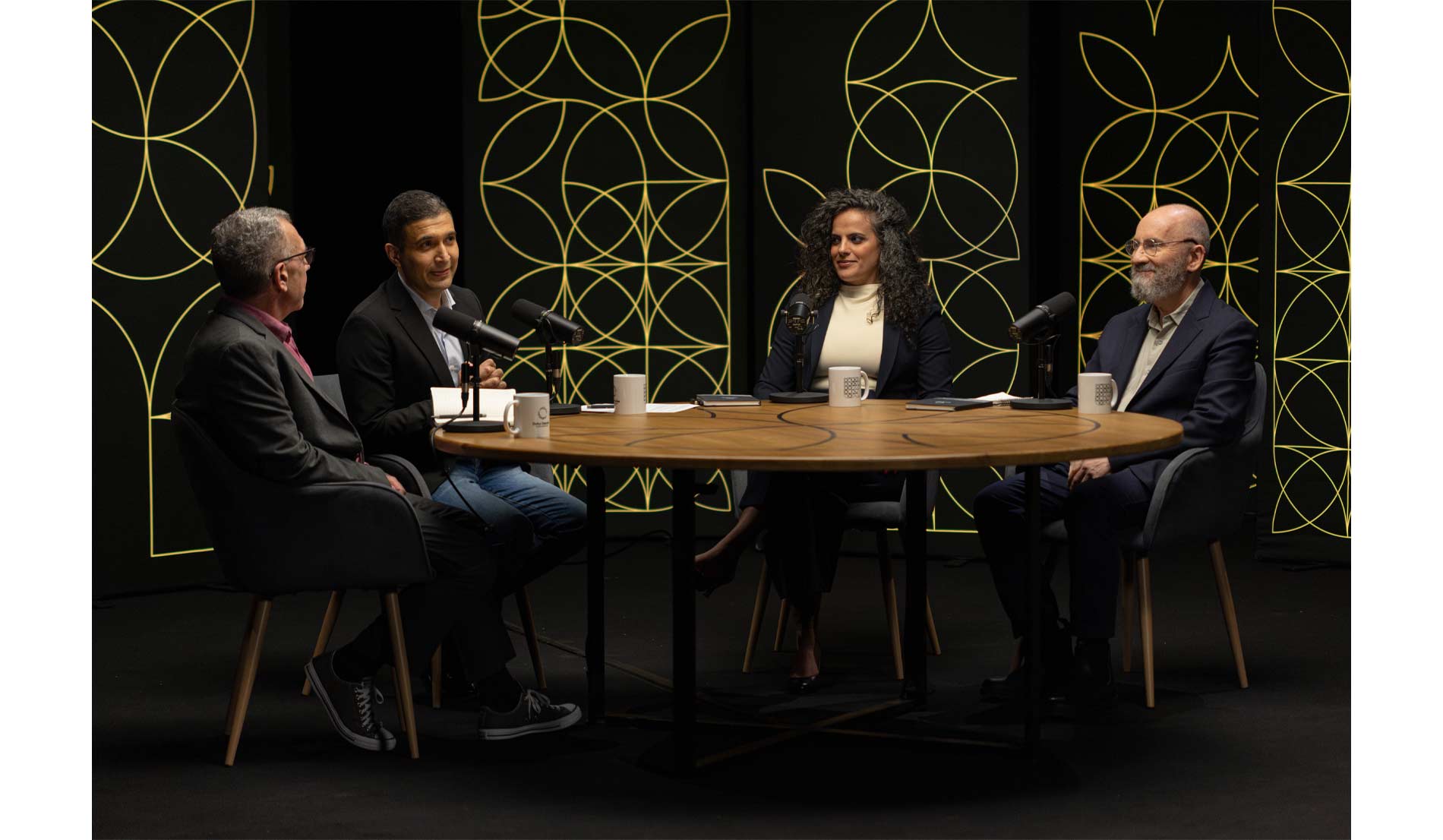
Qatar Foundation’s Doha Debates Podcast Examines What Football Reveals About Society
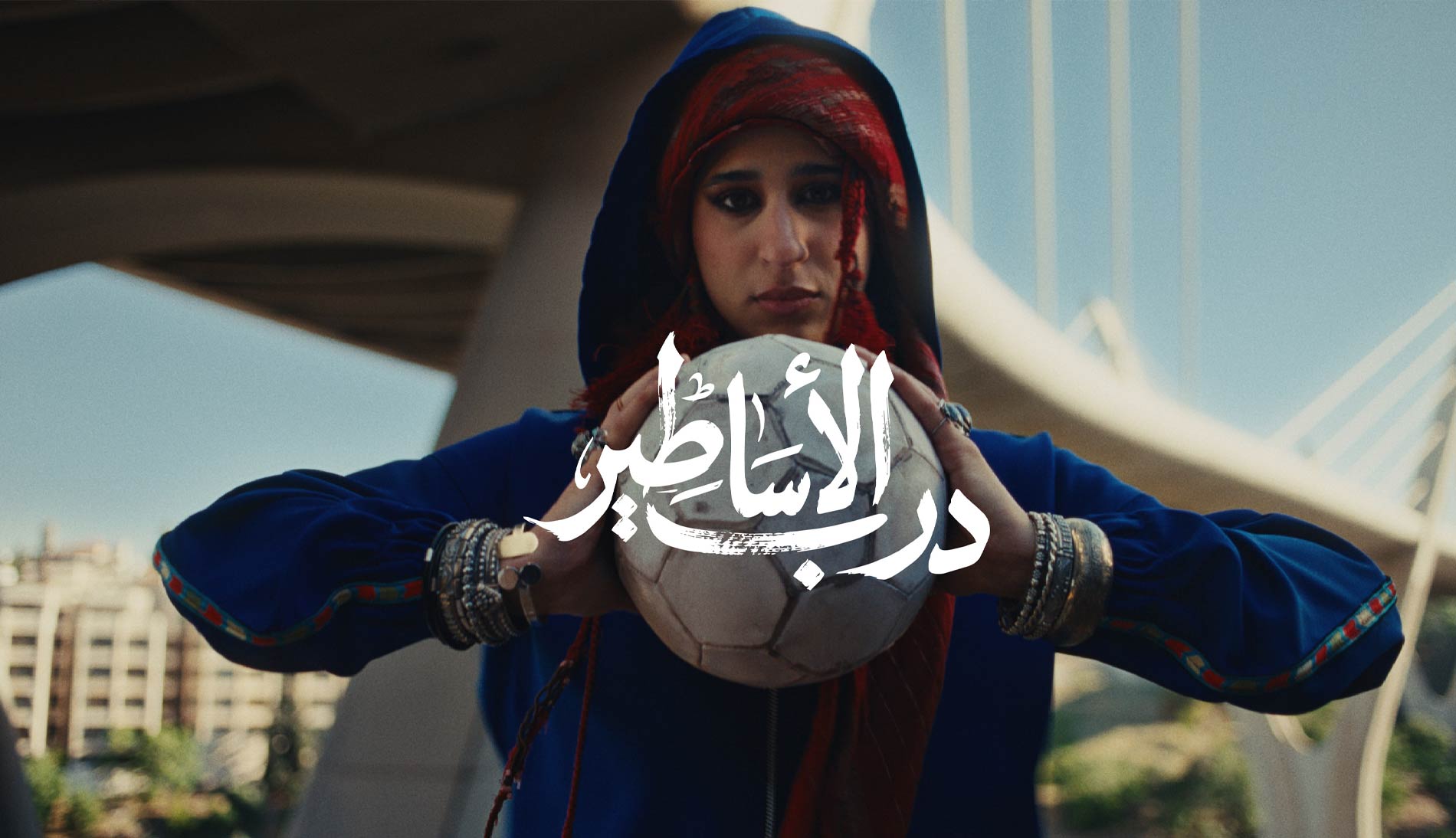
By Reviving the Voice of a Jordanian Legend, Umniah by Beyon's Darb El Asateer Became the Soundtrack of a Nation Overnight
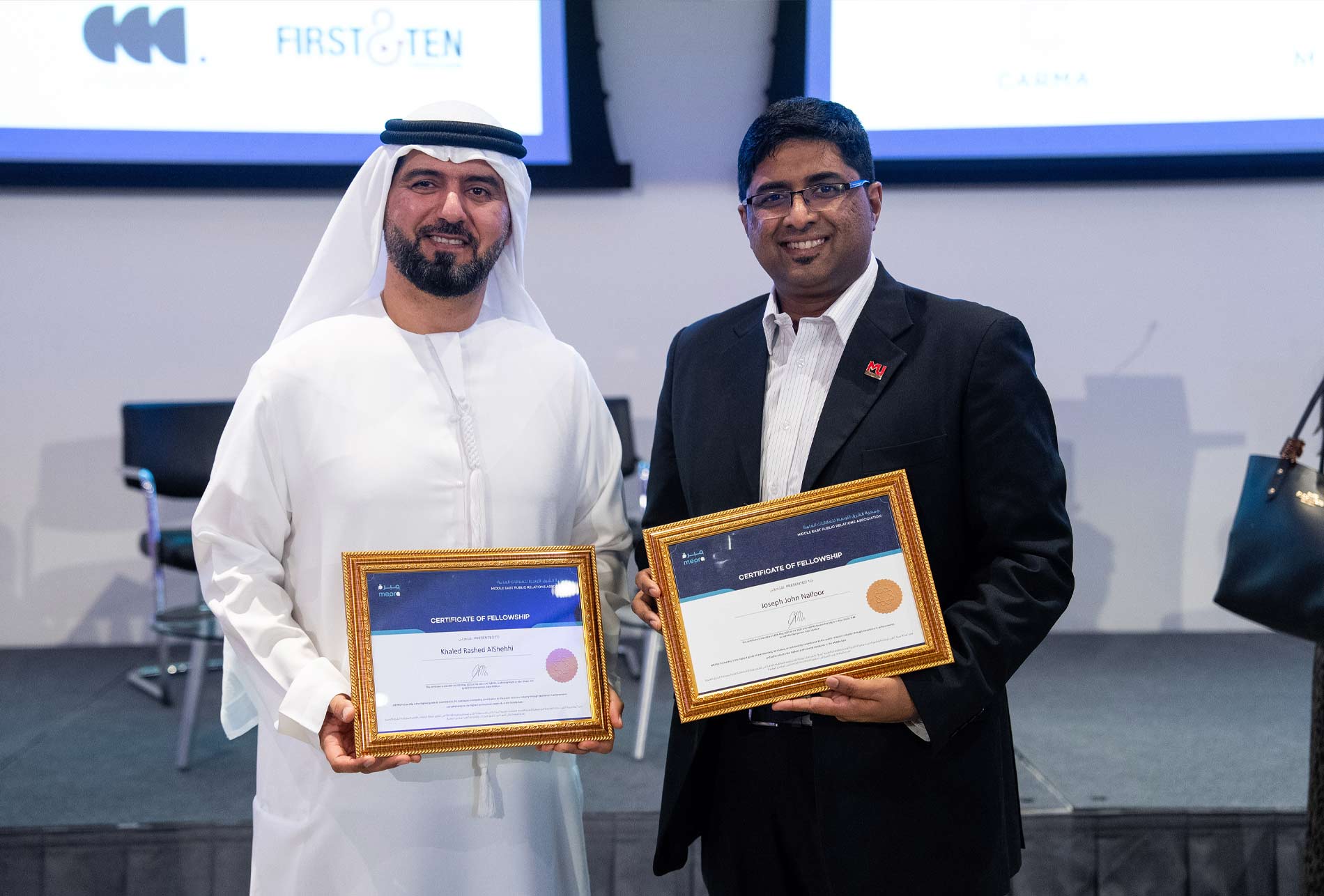
MEPRA’s UAE Leadership Majlis Returns for 11th Edition: “Emerging Stronger: Shaping What Comes Next”
Most Read
By Reviving the Voice of a Jordanian Legend, Umniah by Beyon's Darb El Asateer Became the Soundtrack of a Nation Overnight

Behavioral Science in MENA; Why Global Nudges Fail and Local Heuristics Win

FIFA World Cup 2026™ Sparks Fan Momentum in the UAE, with 9 in 10 of TikTok Users Following Football
