

Industry Talk - Free Talk
Exclusive ArabAd : Disrupting legacy mindsets
by By Iain Alkerman
March 12, 2026
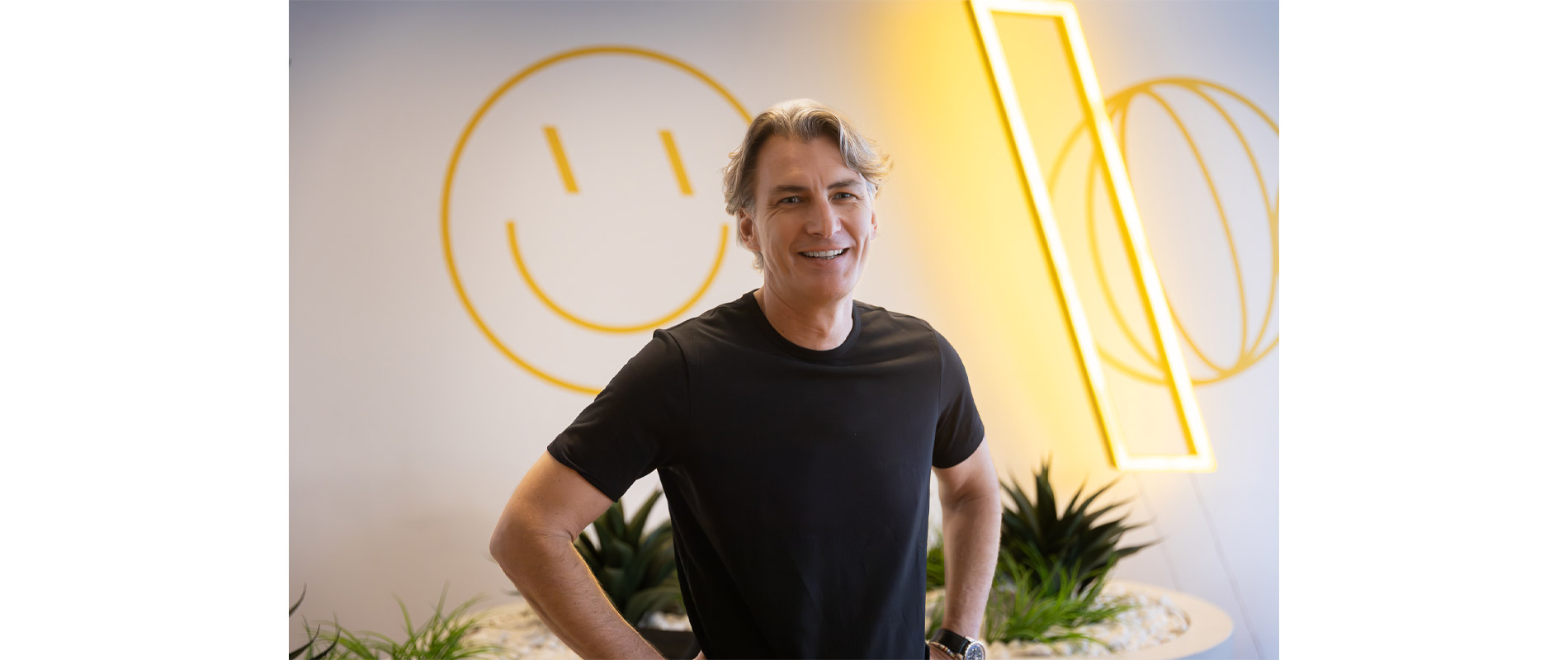
By moving beyond legacy thinking and doubling down on
disruption, TBWA\Raad’s
new Chief Creative Officer, Derek Green, hopes to reignite the agency’s
reputation for bold work
Until recently, Derek Green was doing what thousands of new arrivals to Dubai do every month. He was splitting his time between New York, where his family still resided, and Dubai, where he had taken on the role of chief creative officer at TBWA\Raad. Making that geographic transition work was not always easy, as it is for any new entrant.
“I was doing a month here, two weeks there, working Dubai hours,” says Green, sitting in his strangely spartan office in Emaar Square. “I was getting up at two o’clock in the morning, going through to 10pm, which, weirdly, was fine. It was quiet time to be able to work and do stuff.”
When we meet, it’s a few days after his family’s eventual arrival in Dubai and the serious summer heat has kicked in. Apart from creative concepts for a pitch, the walls of his office are bare.
There’s a relaxed sense of purpose to Green. Filling the gap left by the departure of Walid Kanaan, he arrived from R/GA New York, where he served as vice president and executive creative director, leading on global accounts such as Verizon and Samsung. His task at TBWA\Raad will be of little surprise to anyone who has been watching the agency over the last few years. From the heady heights of 2018, when it was crowned both agency and network of the year at the Dubai Lynx, it has slowly faded from the spotlight. Reigniting its flame will therefore be a priority.
Despite the scandals surrounding Cannes and the deeply flawed nature of awards shows (see separate article), part of Green’s mission is clear: to be number one, both at Dubai Lynx and for the Middle East at Cannes. This will be no easy task. Although the agency was awarded two Grands Prix (for KFC’s ‘Bribe Bucket’ and Al Joumhouria’s ‘Explosion’) and three golds at the Dubai Lynx, it managed only six shortlists at Cannes. By anyone’s estimate, that is a disappointment, especially when compared with previous performances.
Although Green describes the agency’s creative output as “good, solid work,” improvement is clearly needed. To achieve that – and to ensure TBWA\Raad is “future fit” – the agency will have to move beyond legacy thinking and double down on TBWA’s spirit of disruption.
“My mission leans more towards innovation,” he explains. “Doing something that goes beyond the usual. I still see a lot of that legacy mindset: ‘let’s do the TV idea,’ ‘let’s make the key visual,’ ‘let’s get the social stuff done.’ It’s the default way of thinking: ‘This is how we’ve always done it.’ But no. Maybe we should start with social and work backwards. Maybe social feeds the film, or an in-store display sparks the idea. It’s about disrupting that linear process. And it’s not just about advertising solutions. It could be a product, a service, a piece of tech, whatever best solves the problem. That’s the shift I’m trying to push… The model’s got to change. It’s got to evolve. We’ve got to be a little bit more fluid in the way we work.”

In what way?
“I still feel like there’s this traditional setup where the creative team comes up with the solve and then hands it across,” replies Green. “But I mix it up a lot. Just last week, I had a writer working with a strategist on one project, and a social creator collaborating directly with the creative team on another. I’m plugging people in where it makes sense. It’s about mixing up creative teams in new ways – moving away from the old idea of, ‘Hey, the writer and art director are the stars, and they hand over the big idea.’”
Such talk can make people nervous, especially in the age of AI, when copywriters and art directors are filled with anxiety about the relevance of their roles. Will people have to be replaced? Will talent better suited to Green’s vision be brought on board? It’s more of a recalibration, insists Green. “I can hire, I can move stuff around. That’s an expectation. But creatives in general are problem solvers, so if you shift them in a different direction, they’ll go that way. In most cases. Change will be hard for some people, but it just takes a bit of time.”
“We’ve got to make sure we have the right team,” he adds. “People who are curious enough to stay on top of what’s new. It’s also about finding the right people. Sure, it’s great to know the latest technology; that’s important. But it’s just as crucial to have that classic training in advertising and ideas. I still believe that one strong, simple key visual for an outdoor ad should carry the whole thought. I was classically trained to start with out-of-home. You know your idea is great if it works out-of-home, then you can build from there. I think we’ve lost that. People say, ‘We’ll use this bit of technology.’ But what’s the idea? It’s easy to get lost in the technology, versus ‘what’s the key thought?’ So it’s about finding people who can do both.”
Green references a LinkedIn post by the British advertising legend John Hegarty in which he stated that, with AI reshaping how we work, experience now has the edge over youth. “I thought that was great,” says Green. “Because while there’s all this crazy, weird stuff going on, you still need people who understand how to craft a really simple idea and build from there. I feel like some of the younger ones are so caught up in everything that’s happening, they can’t always find that simple, core thought.”
Interestingly, his greatest immediate challenge is managing the deluge of RFPs coming through the door. With deadlines of two weeks or less and expectations of fully-blown campaigns, the agency is “cherrypicking the ones that are right for us”. Nevertheless, pitches are putting a heavy strain on the agency’s resources.
“It’s tough when you don’t have the team in place to handle it, and then you’re expected to build on top of that. From an industry perspective, it’s not sustainable. Every agency is saying the same thing, it’s just so much, and it keeps coming on top of the day-to-day work.”
In this RFP-heavy environment, AI has proven its worth. “If you think back only six months ago, how did we get through these pitches without it? I can build visuals so quickly. I can build a full animatic. We produced an amazing two-minute film, and it looks damn good, but it’s used to demonstrate how it could look. And that’s the thing about AI. It’s just a tool you can work with. AI is obviously critical, but for me, it’s the ability to think differently that is key.”