

News - Advertising
The age of consolidation
by Iain Akerman
December 2, 2025

As legacy agency brands bite the dust and holding groups chase efficiency, adland is facing a profound identity crisis. Consolidation, AI, and client in-housing are reshaping the industry, but at what cultural and creative cost?
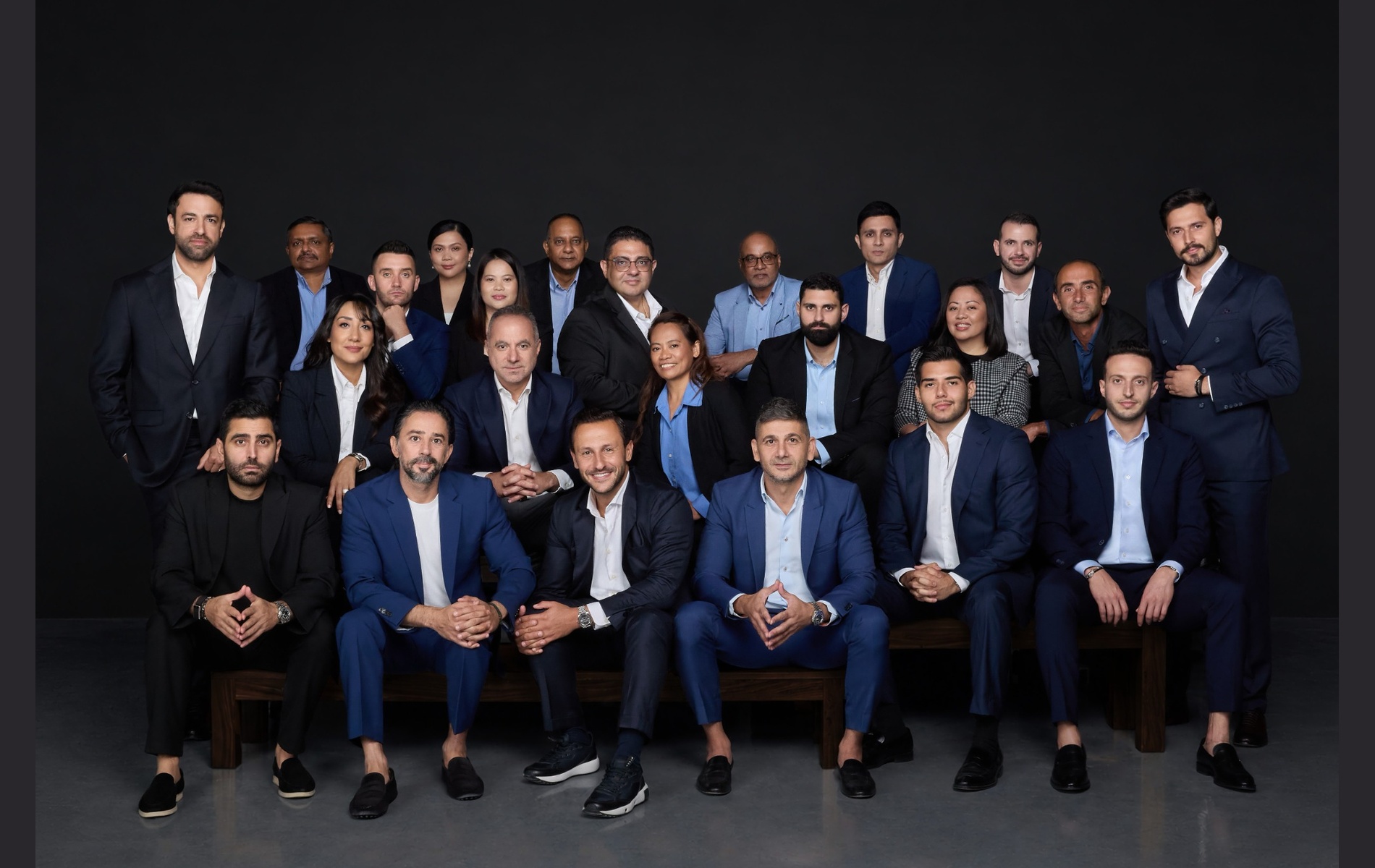
“I wonder how many people in the industry would be able to tell you that BBDO stands for Batten, Barton, Durstine & Osborn. Or that AKQA represents the initials of its founder? How many people cared when Ogilvy dropped Mr Mather after 170 years?” asks Mark Fiddes, chief creative officer at Insignia Worldwide. However, the bigger question, he believes, is “What does an agency brand stand for today?”
It is a question on the minds of many as legacy agencies drop like flies in an age of consolidation. With many of the agencies that defined the golden age of advertising consigned to the trash can of history by an incessant wave of mergers and acquisitions, the industry is left questioning the very value of the brands that forged its reputation.
Following regulatory approval of Omnicom’s acquisition of IPG, Omnicom is to axe the DDB, FCB, and MullenLowe brands, all of which are present in the region. Under the new structure, FCB will be absorbed into BBDO, and DDB and MullenLowe will fold into TBWA by mid-2026. Omnicom Advertising will operate just three global creative networks: BBDO, TBWA, and McCann. Speaking of the sweeping changes, Troy Ruhanen, CEO of Omnicom Advertising, said: “We’ve made the choice of which culture we want it to be, which brand we want it to be, and which methodology we’re putting our effort behind.”
In January, Publicis, combined Leo Burnett and Publicis Worldwide into a single agency called Leo, streamlining its creative operations and forming the ‘Leo constellation’. Confusingly, some Leo Burnett and Publicis Worldwide offices, including those in the Gulf, the Levant, and North Africa, have retained their individual identities while still being part of the constellation. All of which comes in the wake of the demise of JWT, Y&R, and Wunderman.
This protracted period of consolidation extends to media and PR. In May, WPP replaced GroupM with WPP Media, creating a ‘fully integrated, AI-powered media company’. Mindshare, Wavemaker, and EssenceMediacom continue as brands within WPP Media (for now), but operate within a centralised framework. In the world of PR, Burson Cohn & Wolfe (itself the product of an earlier consolidation) merged with Hill & Knowlton last year, forming a new agency called Burson.
A reckoning for big networks
There has always been reasonable scepticism around mergers and restructures, says Fiddes, who, decades ago, worked for D’Arcy Masius MacManus when it merged with Benton & Bowles. “The media at the time called it The Hindenburg coming to the aid of The Titanic,” he notes. In certain circles, similar sentiments permeate the conversation today as an industry long driven by merger and restructuring faces increasingly ferocious headwinds.
“The conglomerate model that’s driven the industry for decades, with a handful of giant firms dominating, is definitely in trouble,” states Alistair Crighton, an independent communications consultant based in Dubai. “The logic of having creative, PR, media buying, and everything in between in one network isn’t as clear-cut as it was a couple of decades ago.”
WPP, Omnicom, Publicis, IPG, and Dentsu have all been actively merging or reorganising their agency brands to reduce overlap, cut costs, streamline operations, and enhance capabilities, particularly around AI and data. Not because they believe their model is dead, but because integration and cost efficiency are far more valuable than preserving legacy brands.
As Amer El Hajj, WPP Media’s chief executive for the MENA region, says, clients “need simplicity, speed, and seamless integration.” GroupM was built for an era where media scale was the dominant currency. Today, that is no longer the case.
“We operate in an intelligent era where media is everywhere and in everything,” says El Hajj. “Clients no longer want siloed services; they demand fully integrated solutions that unify media, data, production, and creative. Our transformation into WPP Media is a direct response to that need. It signals a shift in priority from sheer scale to intelligent, AI-powered integration that delivers creative personalisation and tangible business growth for our clients.”
Consolidation, but at what cost?
Given the additional pressures of media fragmentation, client in-housing, and heightened competition, particularly from consultancies such as Accenture Song, consolidation is understandable. At the end of October, WPP reported a significant drop in both revenue and profit following a fall in pre-tax profit of 71 per cent for the first half of the year. IPG’s pre-tax profit for the first half of the year fell even further: down 73 per cent to $123.6 million, compared with approximately $456.3 million in the same period last year. Its third quarter results revealed a similar picture of declining revenue but an improvement in profitability.
While consolidation is viewed as the answer, especially by WPP and Omnicom, the repercussions have been considerable. Around 7,000 jobs have been shed at WPP globally in the past year, with more likely to follow. IPG also made cuts (3,200 jobs worldwide) ahead of its acquisition by Omnicom. Now that Omnicom’s acquisition of IPG has gone ahead, heavy job losses are expected. On Monday, Omnicom said it would lay off more than 4,000 jobs worldwide, with the possibility of further redundancies not unlikely.
It is unclear to what extent the region will be impacted by these cuts, but the atmosphere is downbeat. Of the three agency brands to be scrapped by Omnicom, FCB (operating as Horizon FCB) and MullenLowe employ between 150 and 200 people apiece. DDB, although a registered entity, is present in all but name only. Redundancies at Horizon FCB and MullenLowe are guaranteed, especially among senior management. The merger of Burson Cohn & Wolfe (operating locally as Asda’a BCW) and Hill & Knowlton resulted in several high-profile departures in September and is indicative of what is to come.
“Recent big mergers in the MENA region – and elsewhere – have not been glowing successes,” says Crighton. “We can see that by redundancies, resignations, and senior staff leaving. That doesn’t point to a great work culture, does it? These mergers may make sense at the boardroom level, but agencies are more than a collection of P&L sheets. They spend years defining their brands, their corporate ethos, their ways of working – setting up for a major clash of cultures when the fit isn’t right.”
A fraught balancing act
One man who knows the challenges caused by consolidation all too well is Nassib Boueri. Formerly chief executive of Wunderman MENA, he oversaw the merger of Wunderman and JWT across the region in 2019, which led to the creation of Wunderman Thompson. When Wunderman Thompson merged with VMLY&R to form VML in 2023, he oversaw that transition, too, becoming chief executive of VML MENA.
“Getting through mergers is not easy,” he tells ArabAd. “You need a common denominator, which, when you blend four agencies in less than four years, is tough. It took us three or four years to create that common denominator – that sense of unity, of belief, of culture. A key element was not treating it as one brand taking over another, or assuming one was better than the other. We needed to build the best teams going forward, so it was less about where we were coming from and more about ensuring we used our talent in the best possible way.”
Building trust – between offices, teams, staff, and leadership – was the biggest challenge. Some resisted, others left, many were doubtful, but “there is always scepticism when you merge two entities, then another two,” explains Boueri. “Some people resisted the new direction, but at some point we have to look at what’s in the best interest of the company and the clients.”
Leadership vacuums, redundancies, and despondency are commonplace in the wake of mergers and acquisitions. The jettisoning of brand equity, the dismissal of unique creative philosophies, and the disregard of client trust – sacrificed at the altar of efficiency – is not without repercussions. What those repercussions will be is unknown, but consolidation has done much to undermine the industry’s relevance and cultural currency.
As a consequence, new players are attempting to redefine not just the industry offering but the sector’s commercial proposition, says Crighton. Those players include younger, leaner industry challengers with “a clearer focus and an aversion to legacy brands; digital-only players looking to completely up-end the whole sector, alongside private equity firms with a very hard-nosed attitude to commercial performance, and a mission to trim any fat right to the bone.”
An industry in flux
Where now for an industry in flux? Are legacy agencies destined to fade into obscurity, remembered only for their obsession with awards and a few iconic campaigns? Will the combined pressures of AI, in-house marketing, and consolidation prove too tough a fight?
For El Hajj, the rise of in-house teams, AI, and economic scrutiny are “not threats to our existence” but “the very catalysts for our evolution.” The future will be defined by a clear separation between those who merely adapt and those who lead, he states. “The biggest challenge for any agency will be breaking down internal silos and legacy thinking. The pace of technological change, particularly in AI, is relentless, and the talent required to harness it is in high demand. Agencies that cling to old models will undoubtedly struggle to remain relevant.
“But within that challenge lies our greatest opportunity. The agencies that will win are those that can act as true growth partners for their clients. This means moving beyond executing campaigns to orchestrating entire customer experiences. It means blending world-class creativity with powerful AI and data to drive tangible, predictable business outcomes.”
None of which negates the challenges posed to holding groups and their network agencies. Smaller budgets and cutthroat competition are hitting bottom lines, says Crighton, and “the big players can’t seem to work out whether they are operating companies sharing creative and tactical resources, or simply holding companies providing back office infrastructure.” New competitors have also made significant ground, adds Fiddes, especially Accenture Song, which is now the largest agency group by revenue, “partly because they’re engaging higher up the corporate food chain than ad agencies.” Client in-house capabilities have increased, too.
In this changing world, clients are going direct to production companies such as Mad Cow in London’s Soho, which has set up a full-service creative offering called Milk Machine. “Here brands get input into the final comms product without the months of agency ping-pong,” says Fiddes, who questions whether a global network can evolve to succeed in today’s economic climate. “Look for the success stories today, and they are often local agencies with a powerful culture or specific advantage in a particular sector. No wonder M+C Saatchi just snapped up Dubai-based Dune | 23 with their meteoric rise into the sports and entertainment sector.”
Beyond the handful of agencies putting out hero content, Crighton asks how the industry, already struggling with the challenges outlined above, can compete with a company like Meta, which views AI as an opportunity to take total control of the entire advertising stack, from creative ideation and execution to roll-out and metrics.
“Look, governments, companies, organisations and individuals will always need to communicate with audiences,” says Crighton. “And as those audiences and the channels of communication needed to reach them change, so will the experts advising on how to communicate. We’ve seen that change from print to social, from broadcast to podcast.
“Older agencies really aren’t nimble enough to manage the rapidity of change today. That we are in 2025 and there are still specialist digital agencies out there is a crushing refutation of the old agency model. So yes, there are resilient, future-ready agencies and individuals out there. And you can count on them to develop industry models that work for the future: with a complete rethink on how networks work, how teams are structured and created, how results are collated and measured, and how clients are billed. And not before time.”