

Industry Talk - Interviews
Exclusive Arab Ad : Why agencies must prioritise focus and intentional expertise
by Iain Akerman
February 13, 2026

Digital anthropologist and author Rahaf Harfoush has built a career examining the intersection of technology and culture. At OMD Sense, the executive director of the Red Thread Institute of Digital Culture spoke of the urgent need to prioritise focus, build intentional expertise, align technology with belief systems, expand perspectives, and embrace duality.
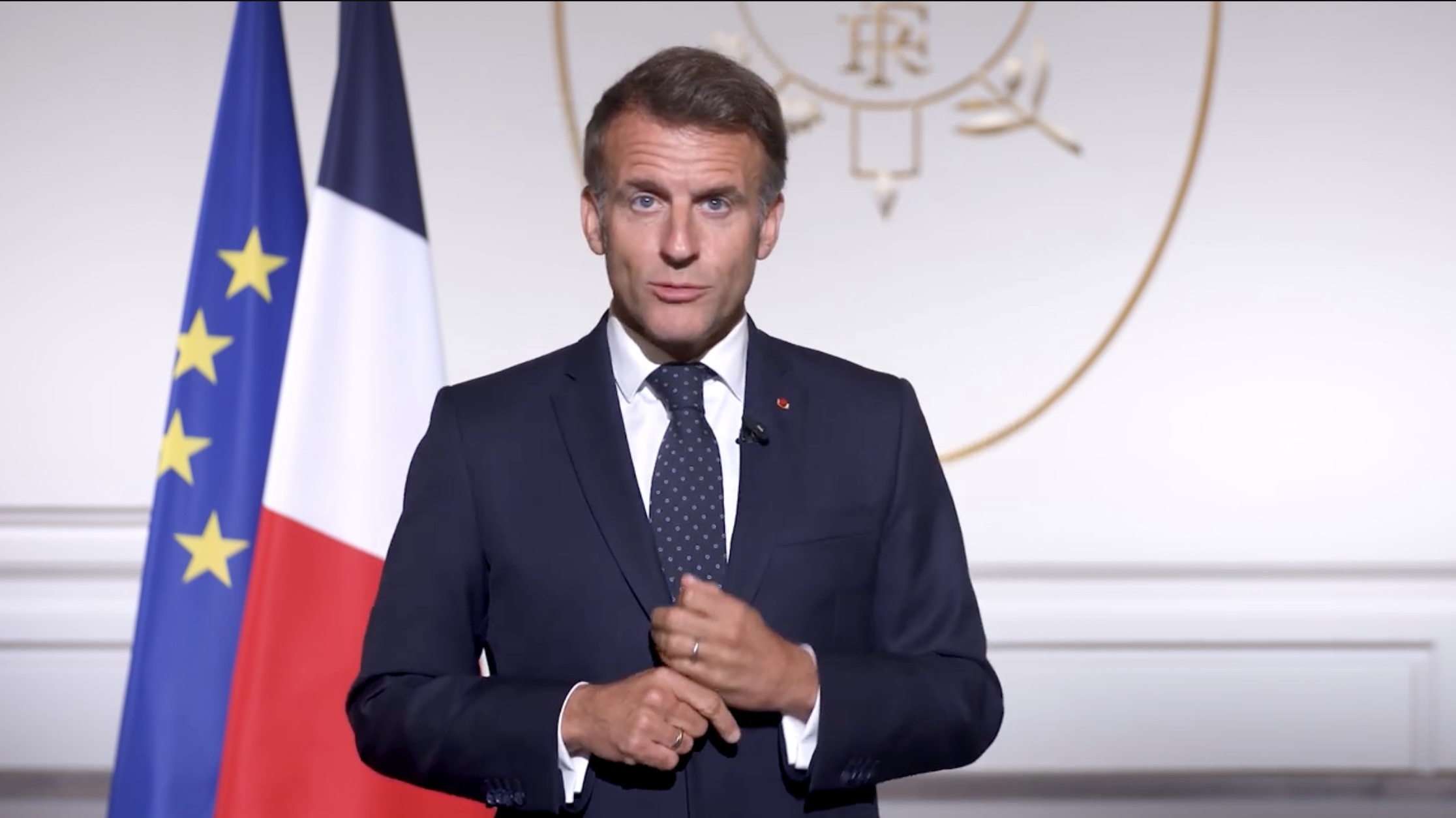
Damascus-born Rahaf Harfoush has been at the forefront of digital culture and innovation since her early days volunteering on Barack Obama’s 2008 presidential campaign. A visiting policy fellow at the Oxford Internet Institute, she was one of five speakers at this year’s OMD Sense conference, where she explored the hidden forces shaping how we navigate today’s digital disruption. Below, ArabAd looks at four of them.
Focus
In agency offices, two values are prioritised above everything else – being always available and immediately responsive. This is amplified by digital platforms such as Slack, Microsoft Teams, or Zoom, which display a little green circle indicating an employee is available.
“The result of this is that the environment we are all working in is one where we are constantly distracted by interruptions,” said Harfoush. “The average employee is interrupted every six to 11 minutes, and every single time they are interrupted, it takes them 23 minutes to get back on task – from a concentration perspective… Why is this problematic? Well, when you look at creativity on a cognitive level, it requires de-stimulation and uninterrupted thinking time. In some cases, it might even require you to be bored.”
This time, however, is not being granted to employees, especially those in creative fields. Instead, digital tools designed for collaboration and communication are being viewed through the lens of productivity, reinforcing cultures of urgency and addiction. “These two behaviours are incredibly detrimental to innovative and creative work,” explained Harfoush, a member of France’s National Digital Council. The result is the creation of team cultures that reward people for responding quickly rather than for thinking deeply.
“So, you start to see the contradictions that we have at work, right? Because we’re telling people: ‘Hey, the world is changing. New generations are coming into power. Be strategic. Be agile, be creative. Solve client problems. Deliver on all these promises. Learn these new technologies. Figure out what AI agents are. Figure out what Gen Z is talking about.’ But while you try to do that, we’re going to interrupt you every six minutes.”
How can this be changed? Well, an agency can start by asking whether the technology it uses supports deep focus or fragments attention. Then consider implementing messaging-free days, focus sprints, or designated quiet hours – not just to reduce noise, but to protect the thinking time that drives real value. Without clear systems to combat digital overwhelm, agencies are not just losing brain power – they’re losing money.
Expertise
Many of the tasks being augmented fall under the umbrella of creativity and knowledge, meaning how we approach day-to-day tasks is going to change. The cultural implications of this could be profound. We are witnessing a shift from a ‘searching’ to a ‘generating’ culture – fundamentally changing how people learn and engage with information. In the past, gaining knowledge meant actively searching for it – in books, on websites, through blogs, videos, or forums like Reddit. Now, that has changed dramatically.
“Soon, for an entire generation of young people, how they search for knowledge is going to look very different. They are going to ask a question, and they’re going to be given an answer… The risk then becomes that we’re losing mastery of thinking if we are not careful. Mastery of thinking is critical thinking, it’s analysis, it’s nuance, it’s solution generating, it’s divergent thinking. It’s the stuff that everyone talks about when they say they want creativity and innovation. These are cognitive skills that require practice, and they require regular use.”
Last year, IBM’s global managing partner for generative AI, Matthew Candy, said AI would soon be so advanced it would not be necessary to have a computer science degree to work in tech. What would be required, however, were skills such as questioning, creativity, and innovation. This means, said Harfoush, that as AI tools become more popular and complex, companies will have to invest in building intentional expertise. That, in turn, means giving people the space to think, solve problems, and engage in divergent thinking.
AI will supercharge deep expertise and collapse weak knowledge systems. In other words, those with industry experience and strong thinking skills will be best placed to harness the full potential of AI, becoming more creative, productive, and efficient. The opposite is true for individuals or organisations lacking foundational knowledge or critical thinking. In February, Microsoft, along with researchers from Carnegie Mellon University, published research showing that the use of generative AI tools such as ChatGPT and Copilot without intentional, critical engagement can lead to a reduction in critical thinking on the job.
“The best results come from when a smart person uses a smart algorithm or uses a very well-designed AI product that gives the best result. Not just the person by themselves, and not just the agent by themselves. So, we have to make sure that as the technology evolves, that we ourselves are evolving along with it.”
Belief systems
The AI‑assisted storytelling platform NovelAI trains its AI models using ‘real literature’, explained Harfoush. But what is real literature, and who gets to decide what real literature is? Such value judgments are embedded in every technology we use. Take AI scheduling and calendar management, for example. Company A reschedules all of your meetings to maximise efficiency throughout the day. Company B, by contrast, clusters your appointments together, ensuring you have dedicated blocks of focus time each day.
“Technology is the manifestation of belief systems,” said Harfoush. “Every technology that you use – every app, every device, every piece of code – has inside it someone’s idea of what they think the world should be, of what they think the future should look like, of what they think success looks like, of what performance looks like, of what productivity looks like. And when you use any one of these technologies, you are co-signing. You’re saying you agree with the worldview that is embedded in these tools.”
This is where ethical concerns come into the fray. Some of the most widely used tools were trained predominantly on data from English-speaking Western countries. So, even if you ask a question in Arabic and receive an answer in Arabic, the values shaping that response may come from an entirely different cultural context. As Harfoush stated, multilingual does not always mean multicultural – in many cases, multilingual might mask a monocultural worldview.
“If you want to preserve the nuances of the region – the cultural identity of the region – we have to push for best practices like data sets that are trained on MENA users, data sets that are trained on the Arabic language, data that is trained on different generations, and on the specific countries that we’re targeting, because otherwise you might be getting results that aren’t accurately reflecting the reality of the market.”
Complexity
A while back, Amazon said it was experimenting with a feature that would allow users to incorporate a deceased loved one’s voice note into Alexa. The ethical questions surrounding such a decision are myriad. Should consent be sought before the loved one’s death? Who owns their voice? What is a child to think if they hear their grandmother’s voice inside Alexa? What happens if your grandmother asks you to join Amazon Prime?
“It’s not about voice assistance, it’s not about digital assistance, it’s not about connected IT, it’s about what happens to the pieces of ourselves that we leave behind after we pass, and how is technology going to change the way that we grieve, the way that we mourn? These are the big societal questions we have to ask now,” said Harfoush. “There are some big issues, especially around trust and integrity and authenticity as it collides with generative AI.”
Elsewhere, a content creator had her likeness stolen and repurposed by a brand without her permission, while brands are struggling with fake accounts, fake websites, fake influencers, and fake academic research about their products. On Twitter, TheCartelDel wrote that if a brand uses AI images, it is the “digital equivalent of wearing an obviously fake Chanel bag. Your whole brand immediately appears feeble and impoverished.”
“The truth is that we live in very complex times, and despite the opportunities and the risks, the reality is that this technology is going to help us and harm us simultaneously. And I think that’s really hard for a lot of us to interpret and internalise, because as human beings, we love stories, and we want to know, is this a friend, is this a foe, is this a good guy, a bad guy, a hero, a villain? And the reality is it’s going to be both.
“And so as leaders, you’re going to have to navigate the complexity and the ambiguity of that truth, because you can’t talk about all the amazing things that are coming down the pipeline thanks to AI – better medical diagnosis, better consumer connection, better solar batteries, better natural disaster predictions – without also talking about the sustainability issues, the ethical issues, and how these technologies can be abused and manipulated.”